Leaf Edge
A trading journal has to earn your trust.
I trade, and Leaf Edge started as a demanding test: could I follow a trade from its individual executions to a useful review? Building the answer took me into financial data, broker imports, connected workflows and the less visible work of making software dependable.
Inspect the interface Visit Leaf Edge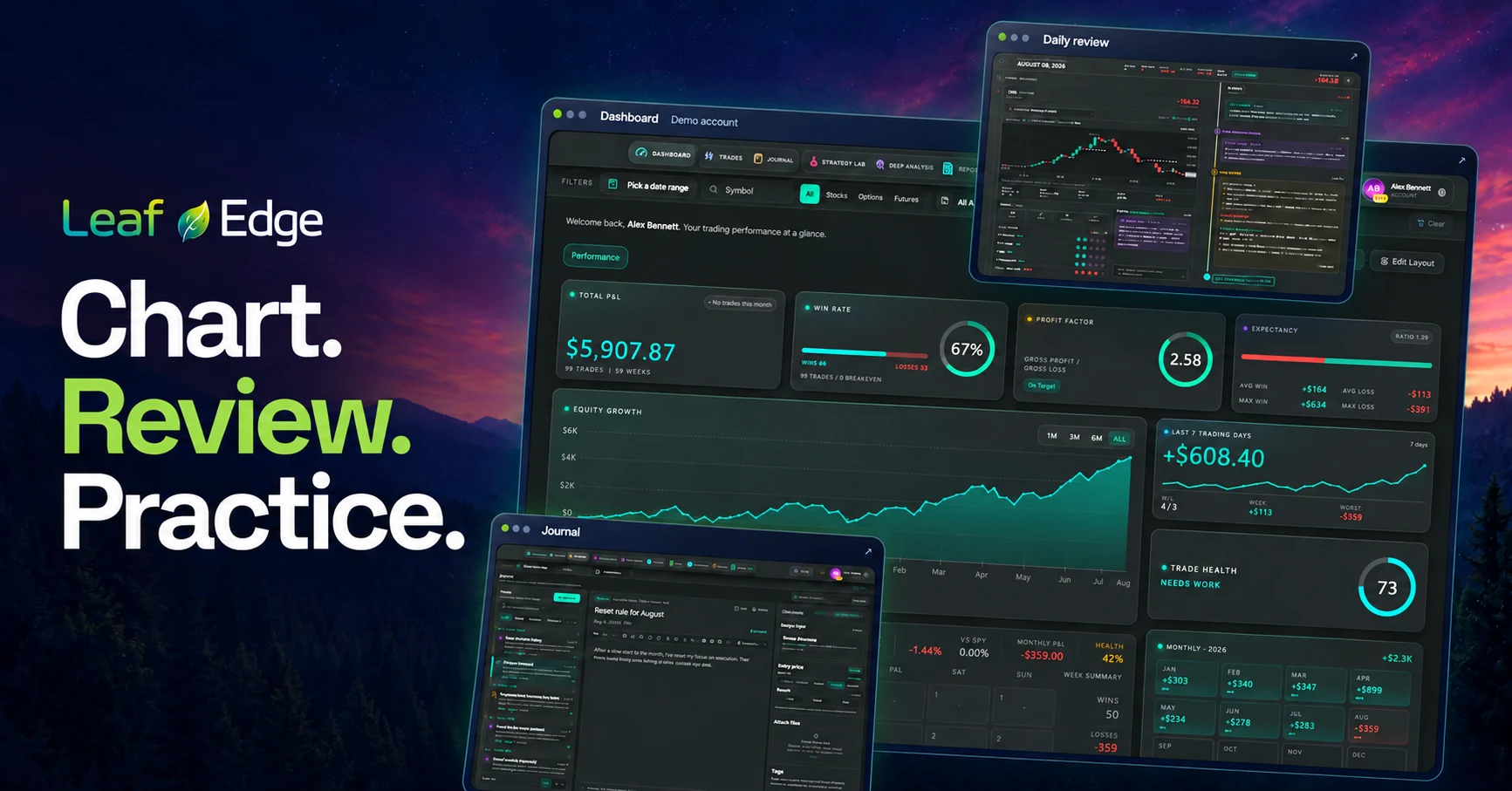
The total never told the whole story.
A trade can involve several entries, partial exits and a final contract sold at a different price. I wanted to see what each execution contributed, then put my reasoning beside it. Notes were split between trade details, daily reports and the journal. Using the app exposed exactly where those pieces failed to connect.
“I want to have the options chart first and foremost the view you see”
From a record to a review.
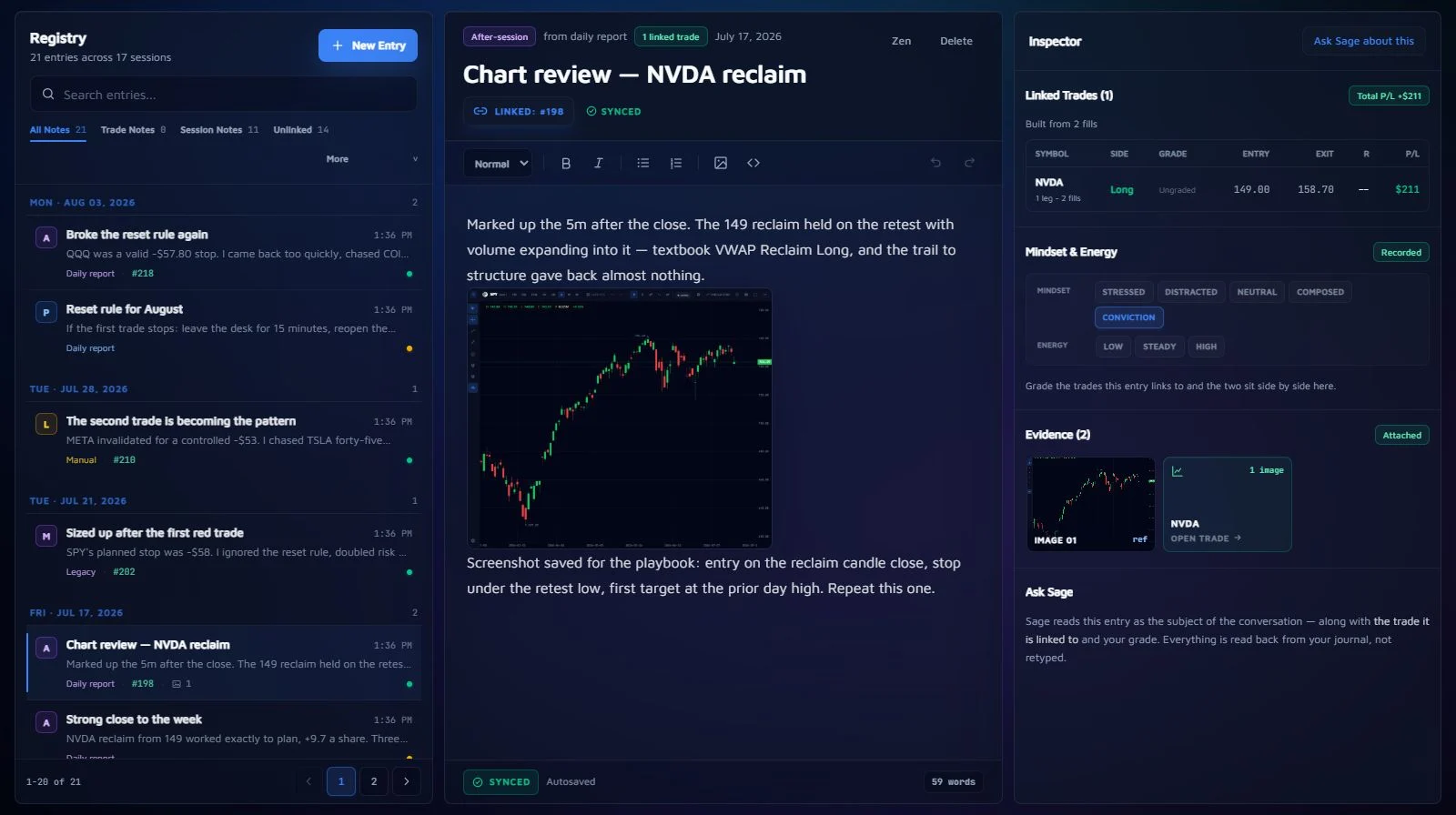
Leaf Edge is a web application connecting broker imports, account records, charts, performance analysis and journalling. I directed the product and the AI-assisted build around that path. The journal now brings a notes registry, editor and linked trade inspector together, so the review stays close to the evidence behind it.
- 01Import records
- 02Explore performance
- 03Review a trade
- 04Return to the journal
How the work evolved.
- May 2026 / The numbers
Follow the individual execution.
I wanted profit and loss on each execution leg, with the options chart leading the trade view. That reaches below the interface: matching trades needs the right contract, account, quantity and price. The matching engine keys positions by contract and account, so fills from different accounts never merge.
- May 2026 onward / The workflow
Bring the journal back to the centre.
Testing turned up duplicated entries and notes vanishing from trade details, and the journal felt disconnected from the trades it described. I made a proper home for notes a standing requirement: grouped, searchable and linked back to the trade. The registry, editor and linked-trade inspector now sit side by side.
- June–September 2026 / The delivery
Ship like a team, even as one person.
Over more than 3,000 commits, I went from asking what a pull request was to requiring checks and independent review before anything shipped. CI replays every database migration and fails if any table lacks row-level security, and more than 750 test files cover the app.
The interface inherits the quality of the records.
This project taught me to follow a problem through the whole application. A misleading number might start in an import rule; a missing note might be a relationship or display problem. Working through those connections changed how I scope, review and test software.
The part I owned.
Founder and product lead. I supplied the trading context, set the workflows and visual direction, directed AI agents through implementation, reviewed changes and tested the application. Auromind collaborators contributed to design, QA and research.
About these images
Drawn from my development conversations from May–September 2026 and a source review on 1 October. The cover uses a demo account; the journal image and homepage walkthrough are application captures from 14 September with seeded data. They show the interface, not a fresh test of a live broker connection.
Status and scope
Broker support depends on the source and import route. Nothing here implies universal compatibility, investment performance or that every advertised feature has been independently demonstrated in this portfolio.
Technical foundations
Next.js · React · TypeScript · Prisma · PostgreSQL · Stripe. The stack reflects the project’s web or desktop workflow and its integration needs.
If your application has complex records, imports or a review process that people struggle to follow, this is the kind of problem I enjoy working through.
Let’s discuss itThe interface, in detail.
MindCap